Pages

Showing posts with label holistic health. Show all posts

Wednesday, December 26, 2018

Living with Rheumatoid Arthritis

I should say up front, that my RA is mild to moderate. I am seropositive, which means my disease course is likely to be more severe, but I feel pretty good most days right now. And I have every reason to hope that diet changes (like trying AIP) and lifestyle changes (like hitting the gym and practicing relaxing self-care) along with medications will slow my progression and possibly even put me into remission completely!

Most days I wake up a little stiff, morning stiffness is one of the hallmarks of RA. For me it's usually in my back and hips, which makes it hard to stand up straight when I first get out of bed. My joints also tend to pop and crack like crazy those first few steps in the morning. I'm like a bowl of rice crispies walking to the bathroom to start my morning routine. Some mornings I skip breakfast and choose to fast, but when I eat breakfast I usually grab something quick like yogurt with berries or leftovers I can quickly reheat. I like to sleep in as much as possible. Sleep is super important and I am a person who needs a lot of it, even before my diagnosis. So if that means I don't have time to cook my own breakfast every morning, that's a sacrifice I'm willing to make.

I head to work around 8:45 am, and when the weather is nice, I'm fortunate to live close enough that I can walk to work! It's just under a mile, so it's a great way to get in some good movement and vitamin D sunshine at the beginning and end of the day. (I was so tired this past summer that I rarely did this, I have been feeling well enough to do this 2-3 times a week so far this year!) I'm a librarian and I'm fortunate that my position keeps me moving throughout the day. I'm not on my feet all day, nor do a sit all day, I've got a good mix of resting and moving which is good, it keeps my joints from gelling up from being in one position for too long. One of my early symptoms was hip pain after sitting for an extended time. A couple times I even got up after sitting for a long time and thought I had sprained my ankle! But the pain went away by walking around for a little while.

Sometimes at lunch I walk home to let my dog out for a little midday break. (Just because she can be in her kennel all day doesn't mean she likes to, so I try to give her breaks as often as possible). When I plan to stay at work for lunch I try to pack something healthy. Often leftovers or a salad with some protein (chicken, shrimp, hard boiled egg, etc.). Sometimes I also continue a fast through lunch. I actually try to fast a full 24 hours once per week, from dinner one night, to dinner the following night.

Afternoon is when my fatigue tends to set in, so I really try to "Eat the Frog" and try to get the highest priority or most difficult stuff done early in the day when I have the most energy. After work I usually head straight home. Often my energy stores are zapped for the day, which is why meal kits have come in so handy for me. Not having to think about what to make for dinner, or spend much time prepping ingredients is so helpful when I'm exhausted at the end of the day. Still, I also try to use evenings as time to build community and challenge myself intellectually by going to Bible study, book club or taking classes at the local community college.

Before bed I've started an oil pulling routine (more on this in a later blog post), which is also a great time to pop in some ear buds and do a guided meditation. I wash my face and use organic witch hazel toner and then aloe as my moisturizer. If I am having any joint pain I use topical CBD ointment and/or Max Freeze to help alleviate symptoms without needing to take an NSAID. (Though I do take aspirin or ibuprofen when needed, and per my doctor's instructions, I always try to take the minimum effective dose - so if I can spare my kidneys and gut lining by not taking an NSAID for pain, then I will. NSAIDs help with symptoms of RA, but they don't halt disease progression). Then it's off to bed by 10:00 pm so I can hopefully have a full 8-10 hours of sleep to be ready for the next day!

If you have RA, or another autoimmune disease, what is your day like?

Now that was my usual weekday, but Saturdays are my me days - check out the new vlog to see what a Saturday is like for me!


Tuesday, September 15, 2015

Natural Alternatives for Women's Health

Moving away from the issue of real food and how that effects our whole lives - including our fertility and child bearing - I wanted to focus this week on natural options for women's health issues. We will go more in depth on many of these topics in later posts, but I hope this post will serve as a good primer on the topic.


We use chemically treated cotton to sop up Aunt Flo's monthly visit, hormones and plastic to prevent an unplanned pregnancy and 1/3 of births in this country happen by c-section. But is there a more natural way than pills and chemicals to deal with the health and hygiene issues particular to women? I contend that there are many! A combination of factors sent me down this path, including a family history of ovarian cancer, bad emotional side effects from being on the pill and a concern that almost every birth I ever saw on TLC's A Baby Story ended up as a c-section (A procedure I'd always associated with emergencies and high risk pregnancies - not every other episode of a birth show. I knew on very basic level that these healthy women with normal labors should not be going in to get sectioned so quickly - and now I know the science of why as well). Here is what I've discovered.*

More Natural Menses
In treating PMS symptoms I have found that the best ways to help are to prevent through proper diet (check out the resources Nourishing TraditionsReal Food and Practical Paleo for more information). Even with a healthful diet however, hormone fluctuations that effect how our bodies function are a natural (and even essential) part of being a fertile female.

For cramps I recommend . . .
  • Warm epsom salt baths
  • Body rubs with warm grapeseed and/or coconut oil with a drop of your favorite relaxing essential oil such as lavender
  • Heating pads (electric pads work, but the infrared heat may be dangerous in large doses, rice or barley stuffed flannel pads are probably a better option)
For flow I recommend . . . 
  • The Diva Cup (or other menstrual cups) - I can honestly say, I've not had success in positioning mine - but for those who have been successful in this key step, I've not heard a single complaint. They are certainly as easy, if not more so, than non-applicator tampons
  • Cloth menstrual pads - The brand I use is Naturally Simple, but there are others available (including here). These are comfortable and reusable, which also makes them great to have in case of a SHTF-type situation where conventional pads are unavailable. You can also make your own.
  • If cloth pads or Diva Cups aren't for you, there are more natural options for feminine hygiene products such as Seventh Generation unbleached feminine hygiene products and other organic lines. (Though, honestly, for the money, I'd invest in organic cotton-based reusable pads).


Hormone-Free Birth Control
I cannot speak more highly of the Fertility Awareness Method for both hormone-free birth control, and for pregnancy achievement when ready. Not only does it help to identify most fertile periods for abstinence or barrier protection to be used (or for intimacy if trying to achieve pregnancy), it also helps us to be more in tune with our body's natural rhythms and to identify symptoms of potential fertility issues. The bible for FAM is Taking Charge of Your Fertility. TCOYF has charting resources available for free online, as does Fertility Flower. Both also have premium subscriptions with more features that might be especially useful for women trying to achieve pregnancy. I can happily recommend both, or either. You may also be able to find similar tools available for your smart phone. I use My Period Calendar, since I am not married, and therefore chart only for feminine health (rather than birth control or pregnancy achievement), this program provides all I need and is easily portable no matter where I'm going. In order to chart you will need to invest in a basal body temperature thermometer available at your local drug store, grocery store or discount store, usually for less than $10.

Natural Childbirth
This is one topic where my knowledge is more theory and science than practice, so I welcome comments from those who have experienced natural child birth first hand. My knowledge comes from books and films I've pursued in copious amounts over the last 5 years or so and the few births I've been privileged to attend. Since I don't have as much first hand experience here (yet) I'll stick to just a few key bullet points and then a long list of resources to allow you to dig deeper into this topic for yourselves.
  • Child birth in healthy women is not a medical condition to be treated but a physical process to be supported
  • The United States has one of the highest rates of c-section of any developed nation, and well over the rate that research shows to be beneficial to both babies and moms (which is to say the rate at which c-sections are truly life saving for the women and their babies who receive them). This is largely due to the interventionist friendly environment of the American OB-GYN system.
  • While c-sections and other interventions are great tools to have when truly needed - the vast majority of women do not and will not need them given proper support and understanding of the natural process of birth.
  • C-section rates go up just before shift changes and before the weekend at many hospitals - this belies the true reason for many unnecessary interventions - convenience for the doctor - not the health of the patient.
Source: www.cdc.gov


My favorite books about midwifery . . .
My favorite must-see midwifery films (in order) . . .
What ways do you tackle women's health in a more natural way?


*I am not a physician, these recommendations are based only on my personal experience and reading. In issues of both child birth and fertility especially, none of this should be a substitute for the advice of a trained medical professional with whom you have a trusting relationship.

Tuesday, September 8, 2015

Don't Fear the Fat


One thing I've been learning over the last several years is to get over my fear of fat. Fat gets a bad wrap since it also is what is often found in our spare tires and saddle bags. Fortunately, Time and other media outlets are finally getting the word out that fat is an important nutrient to our bodies, vital in fact. It helps create our hormones, line our myelin and serves as fuel. It also carries essential fat soluble nutrients - like vitamins A, D and K - that are especially important for our bodies to be able to build healthy ova, sperm and, of course, babies. In fact, both protein and fat are essential to human function. We can live completely without carbs. Not that I would, but I could and so could you! I now see the enemy to my health and fertility as refined carbs. Nutrient dense carbohydrate sources like fruit and especially vegetables are great. Added sugar, grains and their refined flours are not good for us. Yes, I still eat grains in small amounts (and always gluten free), but now when I add a cup of rice flour to a recipe I see it as adding a cup of sugar, because that's how it will react in my body.

The documentary Fat Head (embedded below) does a great job of explaining why sugar (and insulin resistance) is pro-inflammatory and the enemy of weight loss and maintenance, not fat.

One caveat on fats though, trans fats and rancid fats are good for no one. So avoid hydrogenated oils and cooking with vegetable and seed oils. Olive oil is great as a dressing, but when cooked the healthfulness of the oil breaks down due to oxidation. So keep that in mind when choosing which oils to cook with. My personal favorites include coconut oil, butter, ghee, tallow and lard.

For more information on the science behind this I would encourage anyone to check out the Weston A. Price Foundation. I would also recommend the book Real Food for Mother and Baby by Nina Planck. It was this book more than any other that started me down the path to whole foods and clean eating. It's a great resource for moms, moms-to-be, and single girls like me who want to maintain and protect our fertility until we are able to have families of our own.

Tuesday, September 1, 2015

Paleo 101

When it comes to overall health I have not yet found a diet that yields the same results as real food, and especially a paleo diet. I admit I'm not the most faithful paleo lifestyle liver, but I can say from experience that the more faithful I am to paleo the better my health. My digestion is better, my skin is clearer, my allergies are less severe, my joint pain is practically non-existant and I am closer to my ideal weight range the stricter my paleo lifestyle. I've seen a lot of misinformation out there on the interwebs about paleo, so this is my attempt to cover the basics of what to eat, the most frequently asked questions, and to point you towards some excellent resources that have more and better information than I.


What Do You Eat on Paleo?
Lots of real good food! Meats (preferably pastured, organic, humanely raised sources - it's better for the animal and for you, I promise), fish, eggs, lots of vegetables, fruit (especially berries - yum!), nuts, seeds and healthy fats (like olive oil, pastured ghee and coconut oil).

What Do You Not Eat on Paleo?
No grains. (That means no wheat, oats, corn, yes corn counts as a grain, etc. No quinoa either). No legumes (No beans, no peanuts, technically no green beans or peas - but those are in a grey area). No dairy, unless you tolerate it well - and then you should aim for pastured, organic sources - even raw if possible.

Is all that fat bad for you?
Heck no! It's all that sugar, not the fat, not even the saturated kind, that is killing you. Some fat is bad for you - trans fats are good for no one. I repeat - No One. Omega-6 fats (the kind you get from seed oils like corn and canola) are bad for you if not in balance with your omega-3 fats. Saturated fat is also good for you when it is in balance. (No it won't raise your cholesterol and give you heart disease - but sugar will).

Is all the red meat bad for you?
No. But if you're concerned about it you can always stick with poultry, fowl and plenty of fish! Not to mention lots of fruits and vegetables.

Where do you get your carbs?
From all those lovely vegetables and fruits! Paleo is not necessarily low-carb. Yes, you can make it low carb. (And if you have metabolic syndrome that's probably wise). But no, it doesn't have to be. Sweet potatoes, bananas, mangos and papaya are just some of the higher-carb fare that you are free to eat on a paleo diet.

Where do you get your fiber?
From all those lovely vegetables and fruits! (Really - and they come packed with many more nutrients and far fewer anti-nutrients than those whole grains that the food pyramid wants you to get your fiber from).

Okay, I'm interested, where can I find more information?
The two best books I've read on the paleo diet are Practical Paleo and The Primal Blueprint. Some other good ones include The Paleo SolutionYour Personal Paleo CodeEat The Yolks and Primal Body, Primal Mind. For more info see below or check out these resources.

Here are some great websites and blogs on the Paleo Diet and ancestral health:
Marks Daily Apple (author of Primal Blueprint)
Everyday Paleo
Whole 9 Life (authors of It Starts With Food)
Chowstalker
Balanced Bites (author of Practical Paleo)

Here are some more books for both the science and recipes:
Make it Paleo
Paleo Comfort Foods
The Paleo Diet Cookbook
Primal Blueprint Cookbook
Good Calories, Bad Calories
It Starts With Food
Well Fed


It should go without saying that I am not a doctor and while I am a strong proponent of the paleo diet because I've seen it work first hand, I do not know your unique situation or medical history. Always consult a trusted physician before undertaking a new diet or exercise program.

Tuesday, August 25, 2015

Rewards That Don't Involve Food

As I've thought about my own struggle with weight it's become clear that I have an unhealthy relationship with food. One could reasonably say an addiction to junk food. This shouldn't be too surprising, it's well known now that food companies use flavors to hit the pleasure center of our brain, filling us with empty calories and leaving us a craving more. Our broken food system is only part of the problem for me and many others though.

For me, and I'm sure some of you and others you know as well, our unhealthy relationship with food also started in childhood when junk food was used as rewards or for special occasions. Our parents, rightly, didn't let us have these foods often, but when they did it was always a treat. We got to go out for dinner on the last day of school. We got candy for holidays. We'd get a gumball at the grocery store if we behaved well. We got cake or cupcakes for our birthdays. We got soda at big family events, like the Fourth of July picnic, or on those rare special occasions when we went out to eat. The circumstances of our treats added extra ties to the pleasure centers in our brains, above and beyond what was being created by the junk food alone. For me at least, later on in life, as I was able to make more and more of my own food choices, when I was (am) stressed out I crave those "good feeling" foods like cupcakes, cookies, brownies, chips, fast food and soda, all the more because I've treated them my whole life as a reward. So if I've had a really rough day I've "earned" that cupcake, or two.


In addition to serving "real food" to ourselves and our children, avoiding processed grains, sugars and industrial fats, I propose that we also need to re-think the mentality of junk food as a "special" treat. It is okay to have such things as a once in a rare while food - but I have come to believe that tying it to the idea of a "treat" may be as unhealthy for us as the food itself.

Wednesday, August 19, 2015

Foods for Fertility


As a single woman that just just turned 30 and who dreams of being a wife and mother, one thing is abundantly clear - I must protect my fertility now. If I want to be able to, God willing, naturally conceive, carry, birth and nurse my own children in my 30s, I have to be guarding my fertility. Appropriate exercise is helpful, but a nutritious diet is probably more key than anything else. So, being an librarian, of course I read a lot on the subject of fertility diets, especially the books mentioned at the end of this post. Here is what I've learned, so far.


Tuesday, August 11, 2015

Simple Steps to Real Food


Simple steps? Yes, truly simple. Moving towards more real food has some hurdles, but I assure you most of them are psychological. Making the switch to real foods can be intimidating. Real food tends to be a little more expensive ("But I only have one income to feed a family of 4"), it may mean cooking more from scratch ("But I burn water"), and it may mean avoiding some foods you consider staples ("But I love ramen noodles and cheese puffs"). But it really needn't be as frightening as all that. You don't have to be perfect, just move in a positive direction, one simple step at a time. Taking just little steps towards real food is worth the effort!

If you're ready to take steps to improve you and your family's health - then you're ready to take some simple steps toward real food! And yes, I'm preaching this as much to myself as to any blog readers. I'm by no means an expert or perfect adherent to this crunchy lifestyle, but I'm working on it!


Tuesday, August 4, 2015

Whole 30 - Days 0-3


Day 0 - I am glad I committed to this! I am already feeling better just from keeping gluten free the last few days, I know this will help me feel spectacular. I can do this! I went shopping today at Natural Grocers and some other errands with a couple girl friends. While out I mentioned that I was planning to do a Whole 30 during the month of August and one of the girls said she would love to join me! The other offered to help me with food prep if I wanted, we could just hang out and cook. I was not expecting local support, I figured I would be looking mostly for support online. Now I have both!

After hitting up the grocery store I came home and got straight to work on prepping food. I caramelized onions to go in casseroles, with browned ground beef and in meat balls. I baked a spaghetti squash for my egg casseroles and to have with meat for a quick meal. I sauteed zucchini. I got meat out to thaw. I chopped mushrooms. I made two egg casseroles. One savory: with onion, leek, bacon, spinach, potato and spaghetti squash. One sweet: with apples, walnuts, cinnamon and spaghetti squash.

I didn't get done until almost 10 at night, when I crashed in my bed. Overheated in my un-air conditioned house. Phew!

Wednesday, July 22, 2015

Amy's Almost-Edible Pit Paste


Part of this paleo journey I'm taking is minimizing my exposure to potentially harmful chemicals. While I still wear a conventional antiperspirant sometimes (like for Murph or a long hike with friends), I am moving towards all-natural deodorants for every day use. I tried some brand names, like Tom's of Maine and Jason's and found that, for me, they didn't succeed in deodorizing. After a few weeks of use my pits smelled garlicky or skunky, or both, in any case - not an attractive odor.

Then I tried making my own. Through some trial and error I came to the following recipe:

3 tbsp. coconut oil
1 tsp. avocado oil
1/2 cup corn starch or tapioca starch
3 tbsp. zinc oxide powder (I just used store bought talc-free baby powder)
1 tbsp. baking soda
1 tsp. witch hazel
A few drops of the essential oil of your choice (I used grapefruit - I like the fresh citrus smell)

Melt the coconut oil first then mix in the other oils (avocado and essential oil). Then add the dry ingredients gradually mixing well until you get a smooth paste. As the coconut oil cools it will become more solid, the avocado oil will keep it at consistency that is spreadable (plus avocado oil is great for your skin). I just spread a dollop (probably about a tsp.) under my arms in the morning and it keeps me fresh all day - even when I walk to work in 90+ degree weather. A note for those with very sensitive skin: you can leave out the essential oil (fragrance) and/or baking soda. I found the baking soda to be a bit abrasive, so I don't put much in, but you may want to avoid it altogether.

Monday, July 20, 2015

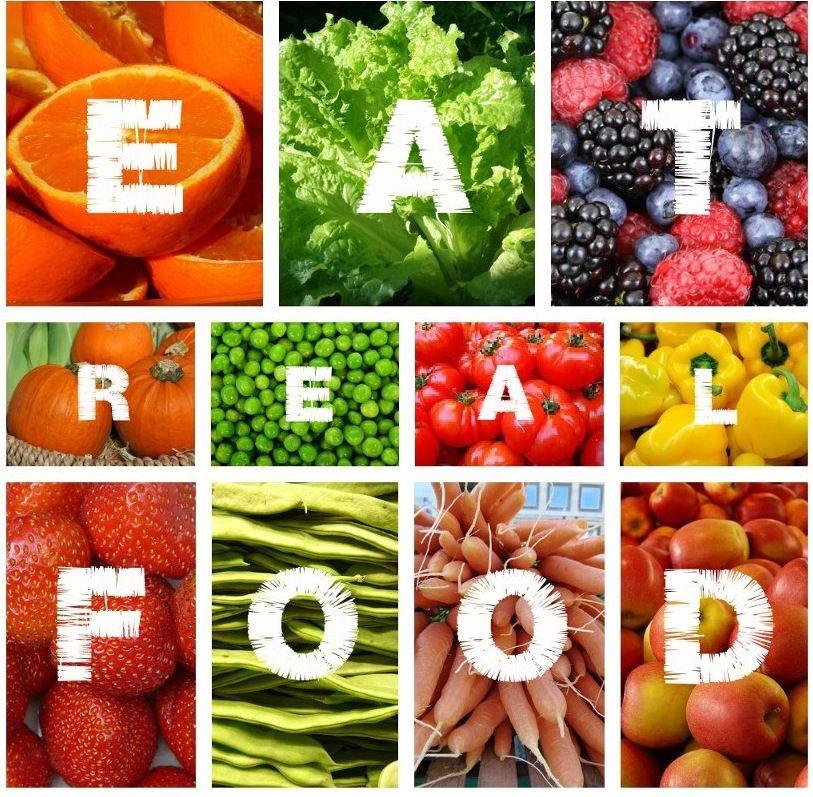
What is Real Food?


The first item listed on my Crunchy To Do List was to "Just Eat Real Food", and I put it first for a reason. I know if I go crunchy in no other area of my life, just eating real food will make a tremendous difference in my well-being.

A couple years ago I had some attacks of abdominal pain that put me in the emergency room. Subsequent testing never gave me a firm answer on the source of the pain, but I was ultimately diagnosed with IBS-D. Since then I have researched several differing, but often overlapping, views on what foods would improve my health and well-being. All of the diets listed below are what I would consider to be "real food" - that is, based on whole ingredients (not processed and packaged junk) and traditional foods.

The one that ended up working best for me has been paleo, which is why paleo is included in the website address for this blog. Though I've not always been on the paleo wagon (and that's one of the reasons this blog exists - is to help keep me accountable by giving myself an audience) - the stricter I have been the better I have felt overall.

Depending on your situation one of these "real food" diets might work better for you than another  - but the common ground is clear - make pastured meat, wild caught fish, natural fats, and whole fruits and vegetables the cornerstones of your diet for better digestion, reduced inflammation, clearer skin, good energy levels, reduced disease risk and better holistic health for life. I like how Nutritional Therapy Practitioner, Liz Wolfe of Real Food Liz puts it as well.


Here is more information on all of these diets so that you can find the best option for you and your family.


Wednesday, July 15, 2015

How To Be Crunchy Checklist


As I mentioned in my introduction post, I have definitely got some latent crunchy/granola/hippie genes. I value real food, even if I don't always make food choices in line with those values. I value self-sufficiency, even if I can also be a pretty darn good consumer of things I could just as easily make myself. I value the great outdoors and conservation, but I do not always recycle or use the greenest products available to me. I value health, but I definitely have some chronic health issues common among populations in the developed world.

So how can I start living out these values I hold more consistently? How can I embrace my inner "crunchy earth goddess"? That is why I started this blog in the first place! To find out. To experiment. To try new things and to more fully integrate the beliefs I already hold into my daily life.

To that end, I have compiled a "Crunchy To Do List" of sorts. Compiling information from other natural and holistic health blogs, books I've read, etc. I have created a list of things to do to fully embrace my inner crunchiness. They fall into a few main categories: Food, Hygiene and Health, Household, and Lifestyle; though some could easily fit in more than one, and others don't quite fit where I've put them - that's where they are listed all the same. So here goes .....


Saturday, July 11, 2015

How To Be Crunchy?

I'm a young woman living in the heart of the Colorado Rockies. Over my life I've dealt with various minor chronic health issues like allergies and IBS, which have become progressively worse over time. I am also overweight and, while I am not willing to compromise my health to lose that weight, I know that my weight probably reflects issues with metabolism and inflammation.

I definitely have some latent crunchy hippie genes, I am what some have called "scrunchie", but in a quest for holistic health and wellness I am on a road to fully embrace a crunchy lifestyle and all that entails. From just eating real food (and trying to decipher whatever that means) to natural fertility (because I may be single now, but I definitely want kids when the right guy comes along), reducing toxins (and trying to decipher what that means too) and trying to live more sustainably and simply. 

You can follow me on Facebook, Twitter and Instagram too! Join me on my journey as I learn How To Be Crunchy!